T3 GEMSTONE O1
TI AM67A-based single-board computer; High-Performance Embedded Artificial Intelligence Platform
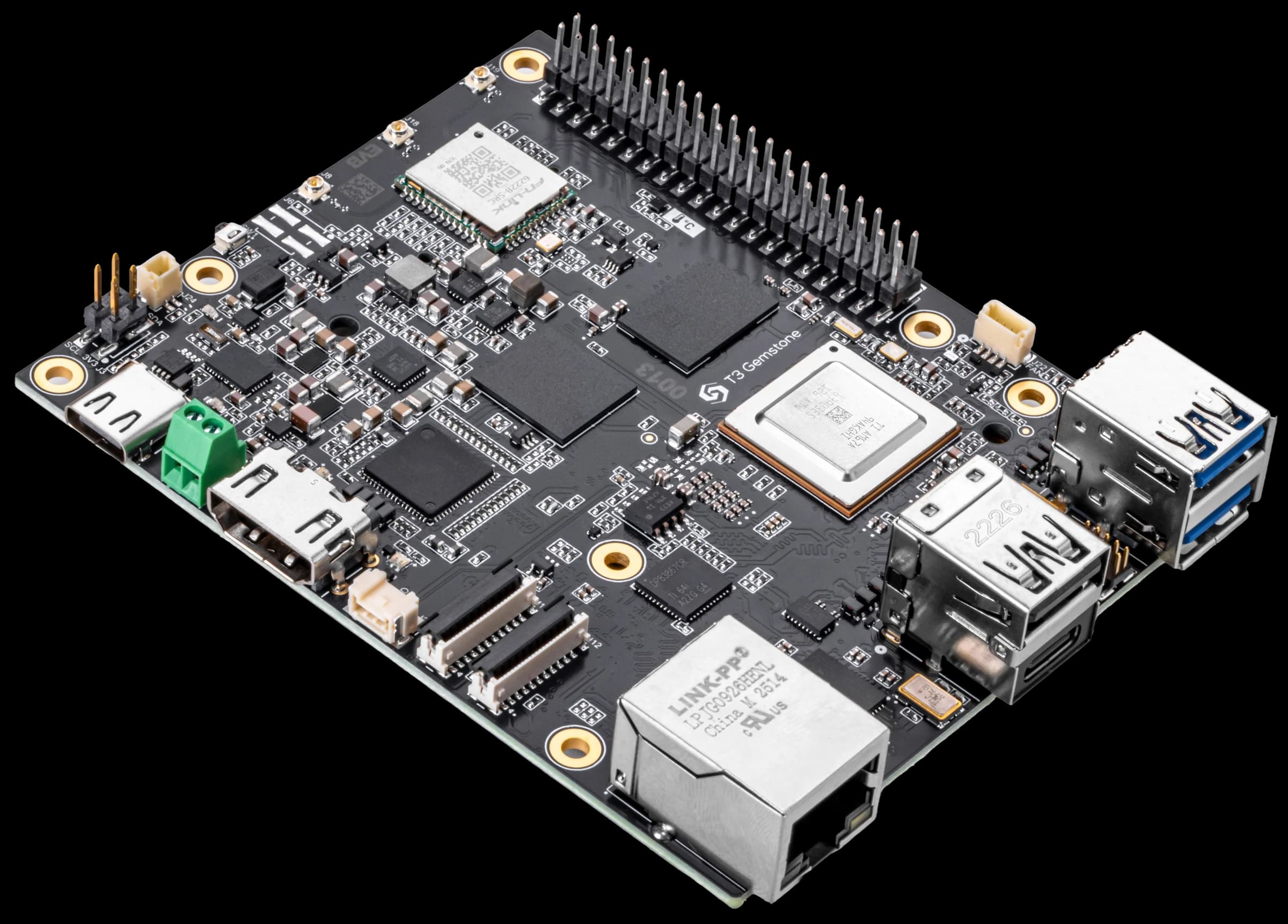
Powerful SoC: Texas Instruments AM67A
At the heart of O1 lies the Texas Instruments AM67A; a processor purpose-built for autonomous systems. Combining high-performance CPU cores, a dedicated AI accelerator, and an advanced vision processing pipeline on a single chip, the AM67A is engineered to meet the demands of robotics, industrial automation, and defense applications.
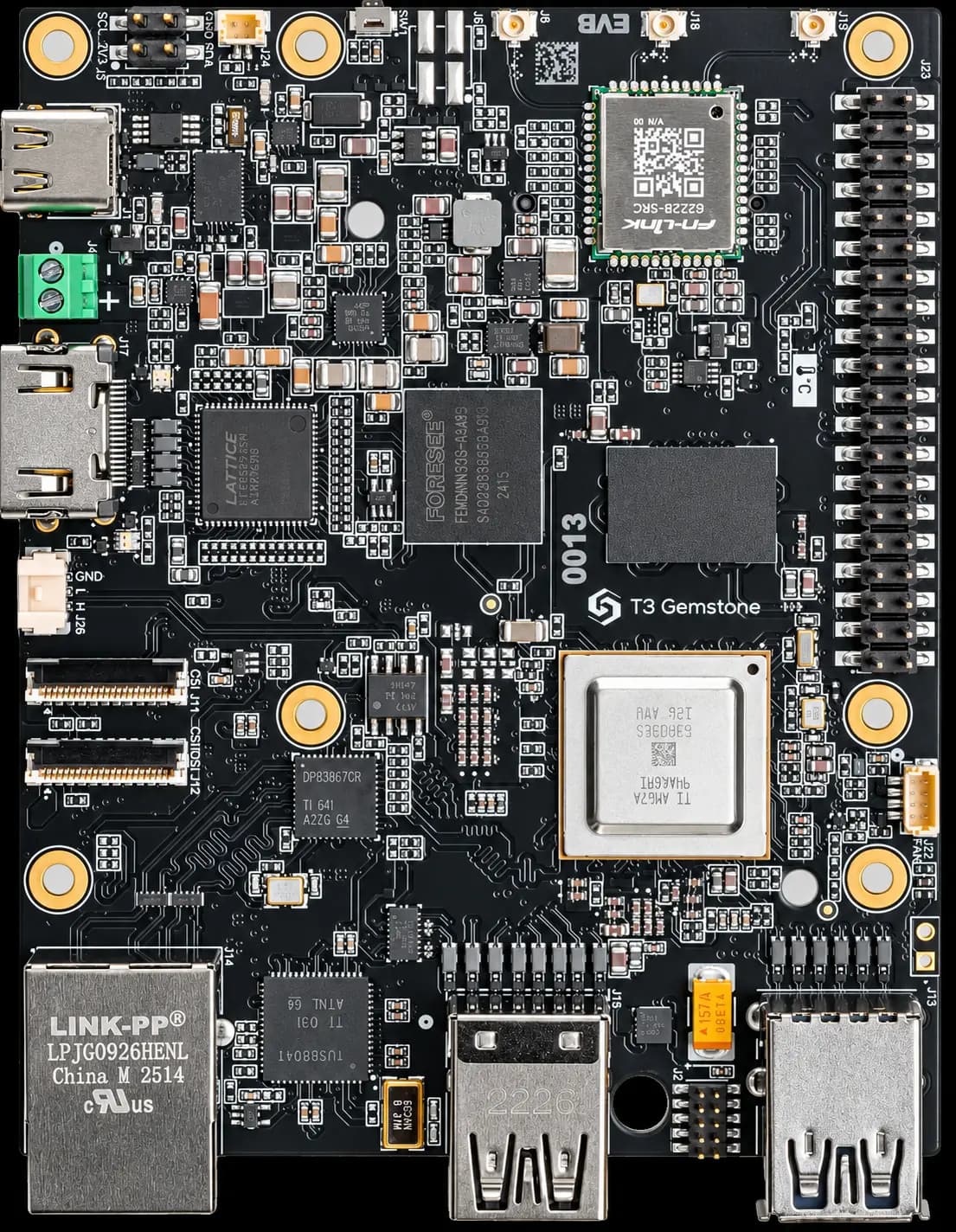
Key architectural components
CPU
4× ARM Cortex-A53 @ 1.4 GHz
64-bit application processor cores optimized for running Linux.
Real Time Processor
2× ARM Cortex-R5F @ 800 MHz
Dedicated cores for low-latency, deterministic real-time tasks.
AI Accelerator
2× C7x DSP + MMA
Run deep learning models directly at the edge with 4 TOPS AI computing power.
Computer Vision (ISP)
7th-gen TI ISP
Professional-grade camera pipeline with RGB-IR support, WDR, lens distortion correction, and dense optical flow engine.
GPU
Imagination IMG BXS-4-64
50 GFLOPS graphics performance with OpenGL ES 3.2 and Vulkan 1.2 support for advanced visualization and HMI interfaces.
The AM67A is based on Texas Instruments' Jacinto 7 architecture, developed for industrial and automotive markets. With long-term production guarantees and a comprehensive software ecosystem, it provides a reliable foundation for enterprise-grade projects.
For Whom
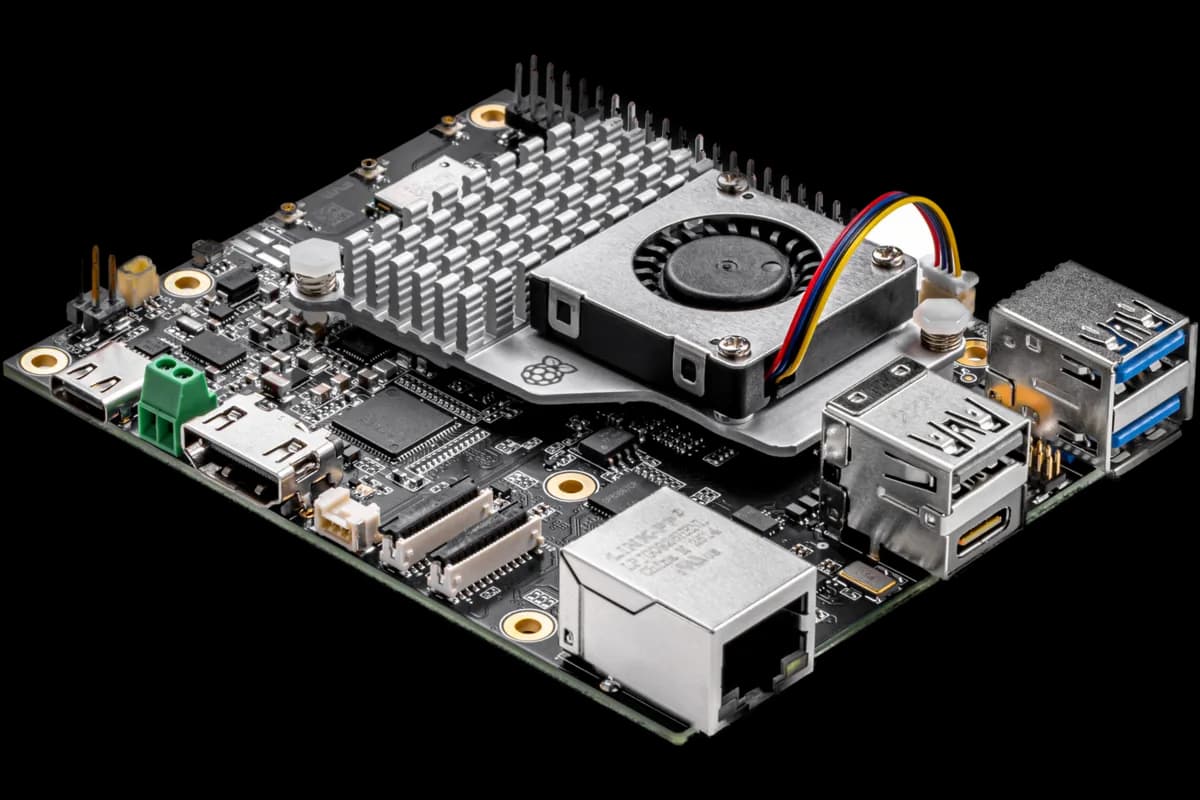
Enterprise Projects
Develop with supply assurance and open-source BSP from prototyping to mass production.
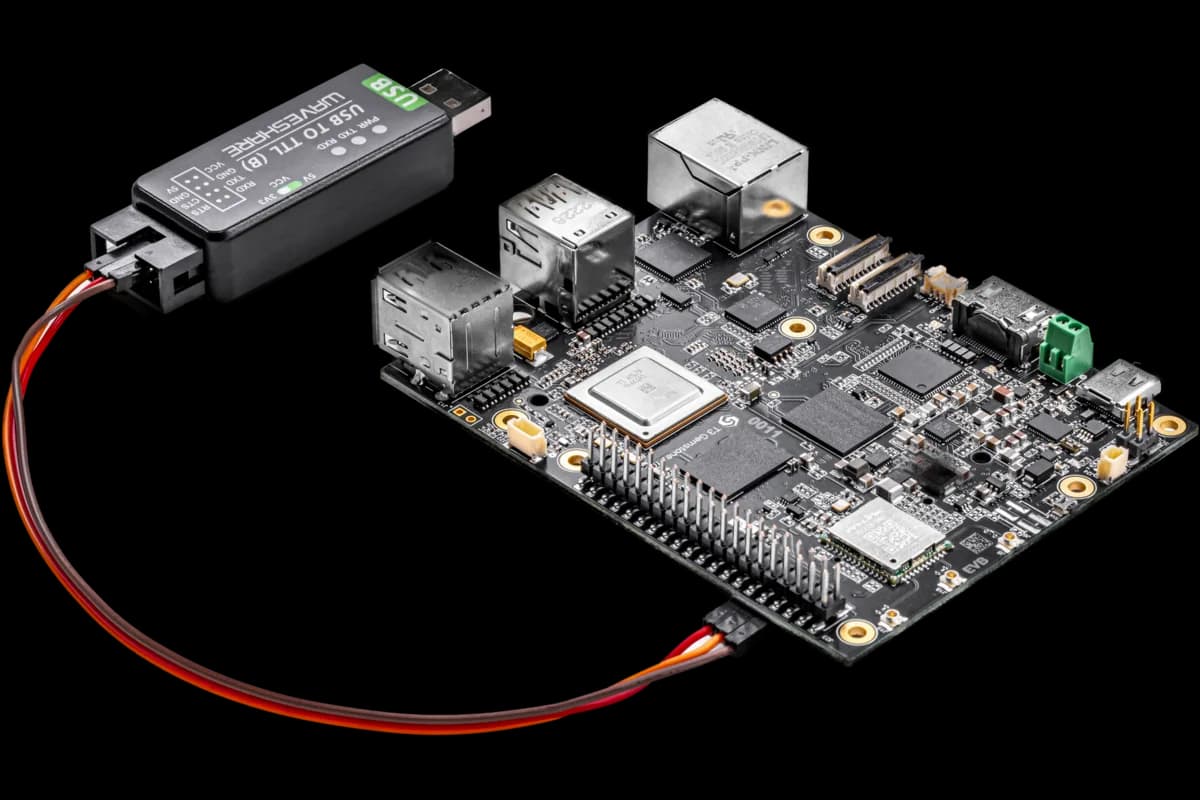
Startups
Bring your product to market rapidly with quick prototyping, low NRE costs, and a scalable open-source ecosystem.
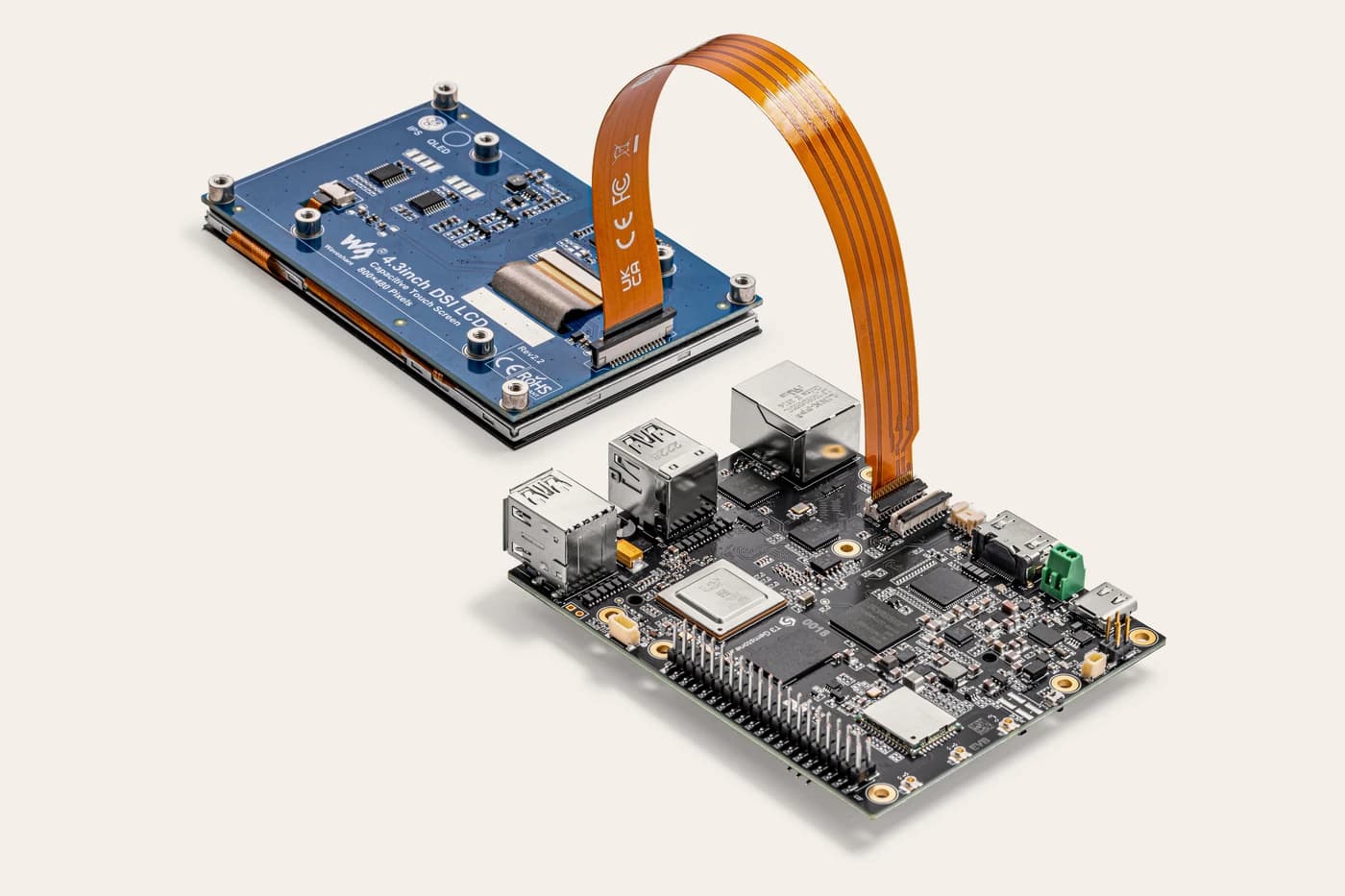
Makers
Develop projects with industrial-grade hardware and stand out in competitions. Gain momentum with beginner-friendly documentation and an active community.
Interfaces
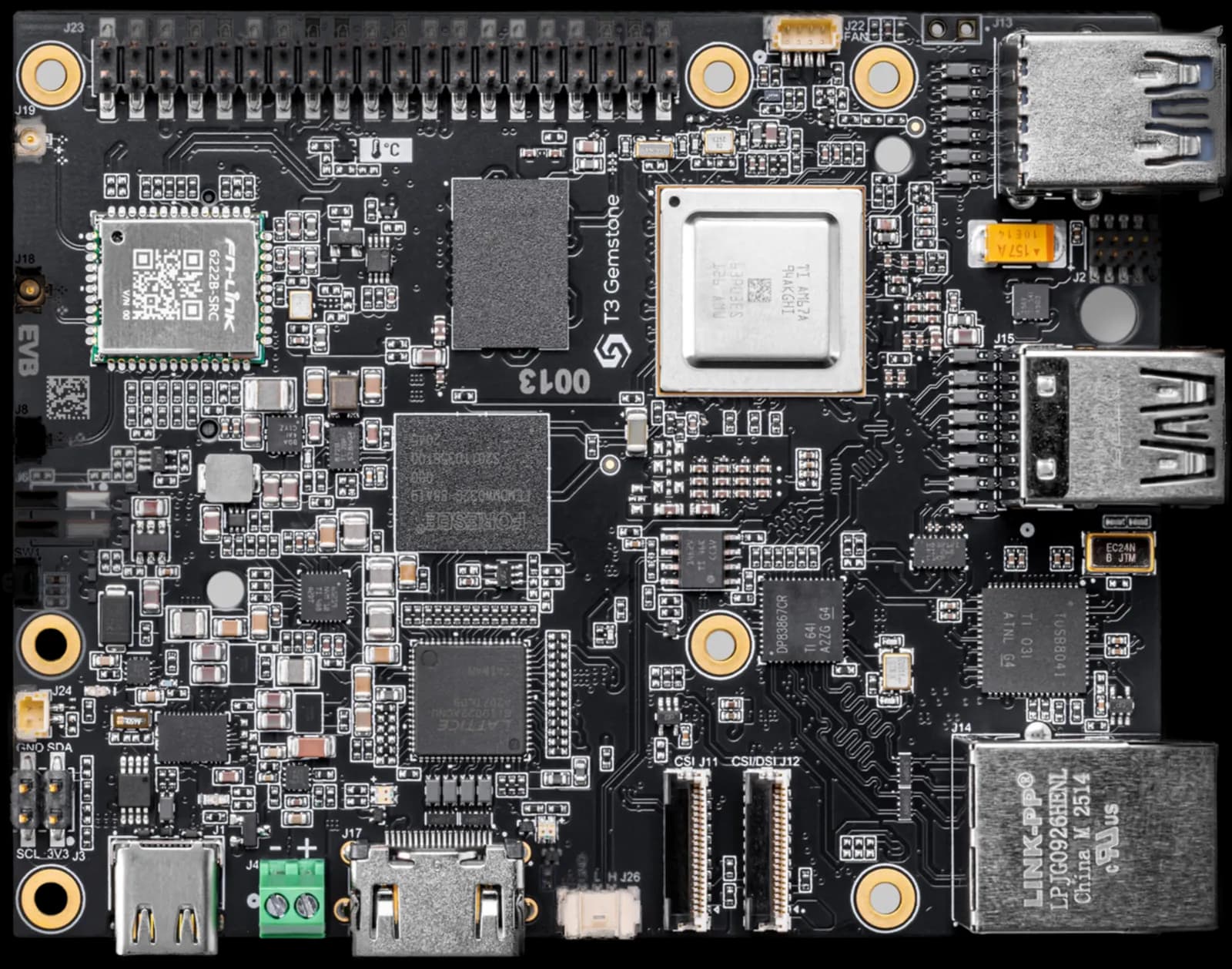
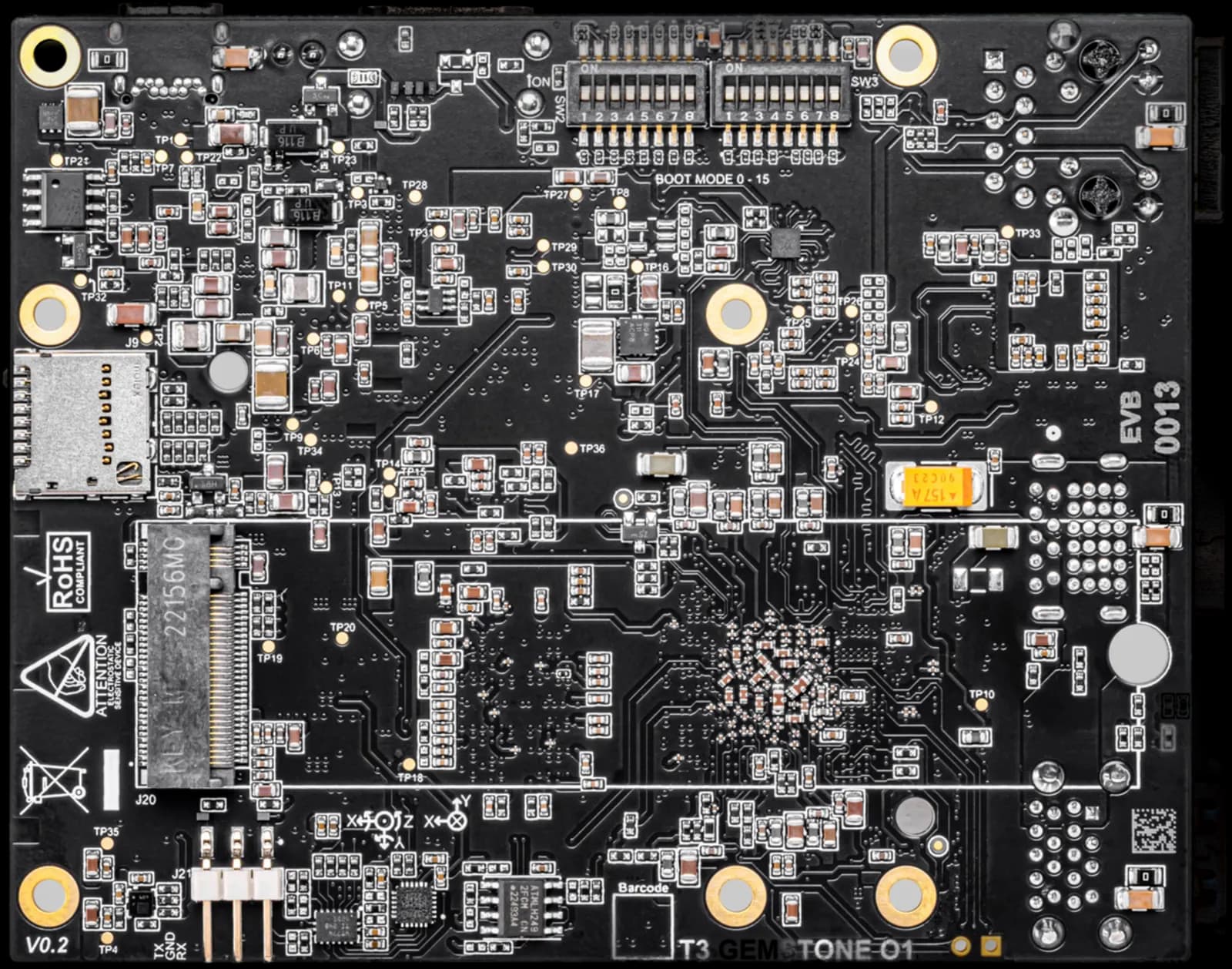
O1's peripheral connections are split across both faces of the board. Switch between the two below to examine either one at full scale.
Real Output
One file, the whole pipeline.
O1's object tracker runs detection on the C7x accelerator and holds each object's identity across frames. A single config file decides all of it: the Example pane is that file, and the Output pane is the frame the board produced with these exact values. Copy the file and change it on your own board.
models:
model0:
model_path: /opt/model_zoo/TFL-OD-2020-ssdLite-mobDet-DSP-coco-320x320
# lock -> follow one target, and keep it through an id change
# multi -> give every object its own id and report all of them
track_mode: lock
# Any of the 80 COCO classes, chosen by name. [] tracks everything.
track_classes: [person]
# Detection confidence floor. Lower catches more, and more noise.
viz_threshold: 0.6
# Frames an identity survives with no matching detection.
hit_counter_max: 30
# Which candidate to lock while there is no lock:
# closest_to_center | largest | first
lock_policy: closest_to_center
enable_tracking: True
outputs:
output0:
sink: remote
width: 1280
height: 720
encoding: h264-rtp
[INFO] Tracking classes: person (model indices [0])
[INFO] Tracking mode: lock - locks onto a single target- Mode
- lock
- Class
- person
- Threshold
- 0.6
track_classes decides what gets a box; track_mode decides whether the app locks onto one target or reports every object. The badge and throughput figures are the app's own output, measured on a live camera.
Multi OS Support
Built by the community, for the community.
Gem Imager makes installing an operating system on your T3 Gemstone O1 fast and effortless. Simply select your preferred system image, write it to your SD card or built-in eMMC storage with a single click, and have your device ready in minutes. Gem Imager runs on Windows, Linux, and macOS.
Technical Specs
| Processor | Texas Instruments AM67A (4× ARM Cortex-A53 @ 1.4 GHz) |
|---|---|
| Real Time | 2× ARM Cortex-R5F @ 800 MHz |
| GPU | Imagination IMG BXS-4-64 (50 GFLOPS, OpenGL ES 3.2, Vulkan 1.2) |
| AI Accelerator | 2× C7x DSP + MMA (4 TOPS total) |
| RAM | 4 GB LPDDR4 |
| Storage | 32 GB eMMC (built-in) · microSD · M.2 2280 NVMe |
| Wired Network | Gigabit Ethernet (RJ45) · CAN FD |
| Wireless Network | Wi-Fi 5 (802.11ac, 5 GHz) · Bluetooth 5 / BLE |
| USB | 2× USB 3.0 Type-A · 1× USB 2.0 Type-A · 2× USB 2.0 Type-C (one PD) |
| Camera | 2× 4-lane MIPI CSI-2 (RPi Camera V2 compatible) |
| Display | 1× 4-lane MIPI DSI · 1× HDMI (full-size) |
| Expansion | 40-pin GPIO (RPi compatible) · PCIe Gen-3 · JTAG · UART |
| Onboard Sensors | 9-axis IMU · Barometric pressure · Humidity+temperature (HDC2010) |
| Power | USB-C PD (5–9 V / 3 A) or External Power (5–12 V / 5 A) |
| Security | Secure boot · Encrypted storage |
| OS | Ubuntu, Pardus, and Debian |
The camera and DSI ports are multiplexed: you can choose between a 2× CSI or a 1× CSI + 1× DSI configuration.
Built on O1
Example Projects
Every project below is documented and runnable today. Each card leads to the guide or the repository it is built from.
- Vision
Object Tracking on the O1
Detection with persistent identity tracking at about 29 FPS, publishing normalized target coordinates.
- Edge AI
Accelerated Object Detection
TensorFlow Lite detection offloaded to the C7x accelerator through the TIDL delegate, with CPU fallback.
- Robotics
ArduPilot Autopilot
Install ArduPilot from the package repository and run copter or rover services on the board.
- Connectivity
Wi-Fi Hotspot with Ad Blocking
Share the Ethernet connection over Wi-Fi with NetworkManager and filter ads with AdGuard.
- Server
Personal Cloud Server
Host Nextcloud on the board and reach it from anywhere over a Tailscale VPN with two-factor auth.
- Real time
Real-Time Latency Test
Measure scheduling latency and jitter on the Preempt-RT kernel with the bundled benchmark tool.
Frequently Asked Questions
How much is the internal storage, and can I increase the memory?
The T3 Gemstone O1 features a quite fast internal 32 GB eMMC storage to ensure your operating system and basic projects run smoothly. To practically increase the storage capacity, there is an SD card slot on the board.
Additionally, thanks to the M.2 port on the board, you can vastly expand your storage capacity and flexibly enhance your hardware's capabilities by installing NVMe SSDs or various other compatible add-on modules.
What are the power requirements of the board, and how should I power it?
The T3 Gemstone O1 has two separate power inputs suitable for different usage scenarios:
USB Type-C Power Input (5-9V / 3A): Offering USB Power Delivery (PD) support fully compatible with modern systems, this port is designed as the primary power input for general desktop use, light software development phases, and standard IoT projects.
DC Power Connector (5-12V / 5A): This is a stable, high-current-capacity alternative power input designed for industrial applications, high-power-consuming add-on modules, motor drivers, or scenarios where the board will be used under full load (such as when AI models are active and the M.2 NVMe SSD is working intensively).
Can I run Artificial Intelligence models on the T3 Gemstone O1?
Thanks to its high processing power and optimized Linux infrastructure, you can run popular deep learning frameworks like TensorFlow Lite, ONNX, and Apache TVM at full performance on the T3 Gemstone O1, especially for image processing, object detection, and classification models.
You can easily run custom AI models trained with your own datasets on the board in accordance with Edge AI principles.
Can the T3 Gemstone O1 Development Board be used as a flight controller?
Yes. The T3 Gemstone O1 Development Board is a development board based on the AM67A processor that runs Linux-based ArduPilot flight software; therefore, it can be used as a flight controller in drone and robotics projects.
The board is equipped with the necessary hardware for a flight controller, such as an IMU, barometer, GPS interfaces, PWM servo outputs, and CANbus. Additionally, the 4 TOPS AI accelerators of the AM67A support advanced features like vision-based navigation and obstacle avoidance.